
To organize your camping gear effectively, start with a thorough packing list. Categorize your items and use packing cubes to keep everything in its place. Label your gear for quick identification and designate areas for different activities. Set up a drying area for wet items to prevent mildew. Prioritize lightweight and multi-functional gear to maximize space while ensuring you're prepared for weather changes. Regularly review your gear to keep it in top condition. With these tips, you'll streamline your camping experience, and there's plenty more useful advice on enhancing your outdoor adventures waiting for you.
Summary
- Create a comprehensive packing list, categorizing items to prevent overpacking and ensure all essentials are included.
- Use packing cubes and compression bags for efficient storage, maximizing space and ensuring quick access to gear.
- Organize a cooking station with labeled ingredients and waterproof containers to streamline meal preparation and maintain cleanliness.
- Regularly check and maintain your first aid kit, ensuring it is well-stocked and housed in a waterproof container.
- Stay prepared for weather changes by packing layers, emergency supplies, and adaptable gear to ensure safety and comfort.
Start With a Packing List
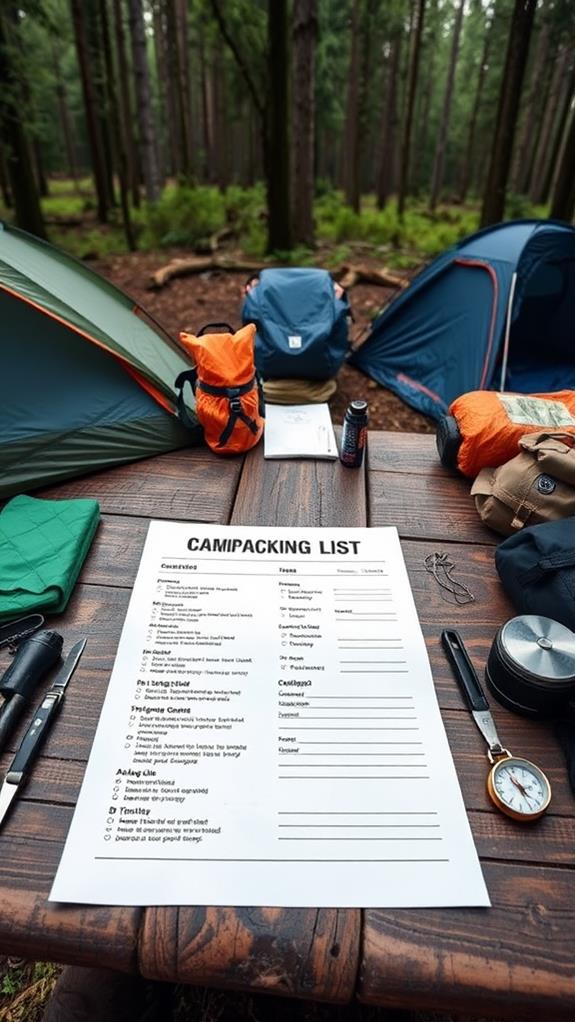
When planning your camping trip, it's crucial to kick off with a solid packing list. This list should include all your camping essentials, from shelter and cooking gear to clothing layers and personal items.
Start by categorizing your items; this innovative packing technique helps you visualize what you need and prevents overpacking. You might consider using a digital app or a simple spreadsheet to keep track of everything.
Prioritize lightweight and multi-functional gear to maximize space and efficiency. As you pack, double-check your list, ensuring you haven't overlooked anything important.
This organized approach not only streamlines your preparation but also enhances your overall camping experience, allowing you to focus on enjoying the great outdoors.
Happy camping!
Choose the Right Gear
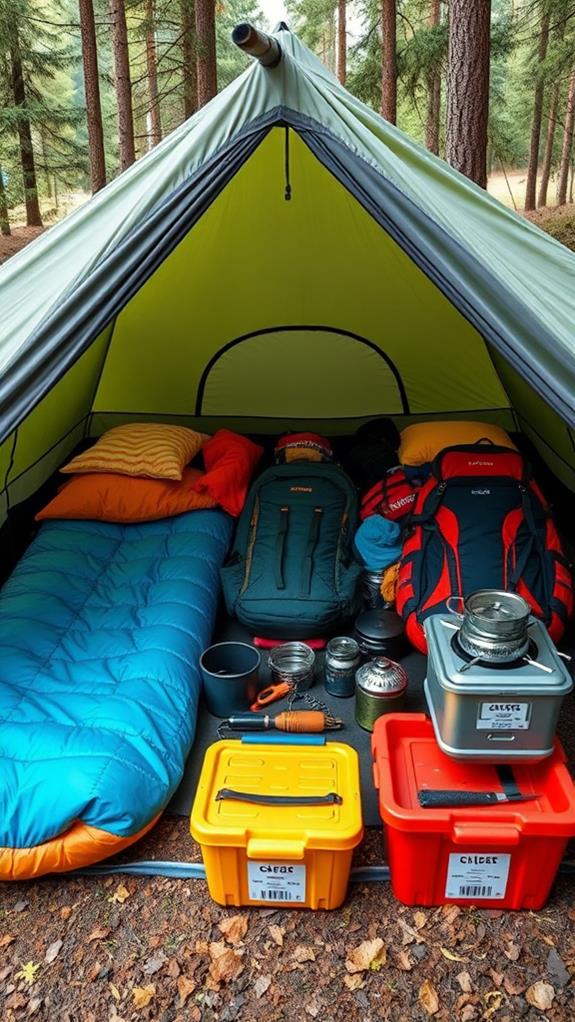
Choosing the right gear can make or break your camping experience. Focus on gear durability and versatility to guarantee you're prepared for various situations.
Look for tents that can withstand different weather conditions and sleeping bags that offer comfort across temperature ranges. Opt for multi-functional cooking tools that serve several purposes, saving space and weight in your pack. Invest in lightweight, durable materials that stand up to the rigors of outdoor adventures.
Don't forget about essential accessories like hydration systems and portable chargers, which enhance your camping experience without adding bulk.
Use Packing Cubes
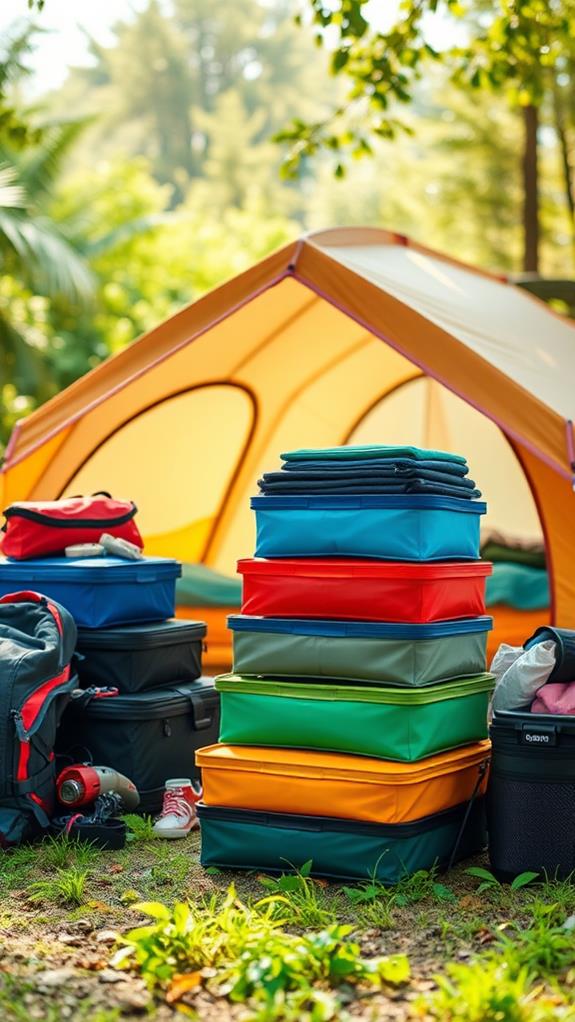
Packing cubes are a game changer for any camping trip. These lightweight travel containers enhance your packing strategies, allowing for efficient storage and space management.
By compartmentalizing your gear, you'll enjoy organization benefits like quick retrieval and easy access to essentials. Use different cubes for clothing, cooking gear, and toiletries, so you can find what you need without rummaging through your entire bag.
For better gear longevity, choose materials that withstand outdoor conditions while being easy to clean. Follow some simple maintenance tips, like regularly checking for wear and tear.
With packing cubes, you'll streamline your camping experience, making it hassle-free and enjoyable. Get ready to hit the trails with your organized gear in tow!
Organize a Camping Checklist
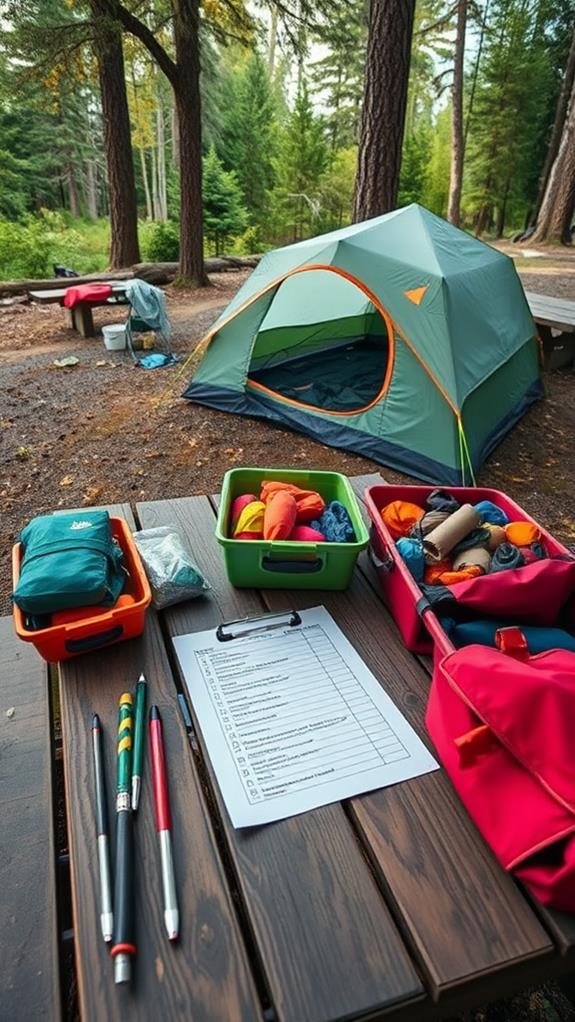
To guarantee you don't forget essential items on your camping trip, organizing a thorough camping checklist is a must. Start by categorizing your camping essentials into sections like food, shelter, clothing, and cooking gear. This approach not only promotes list organization but also helps you visualize what you'll need for a successful outing.
Utilize digital tools or apps to create your checklist, enabling easy edits and updates as you prepare. Don't forget to include personal items, like toiletries and first-aid supplies, which are often overlooked.
Designate Gear Categories
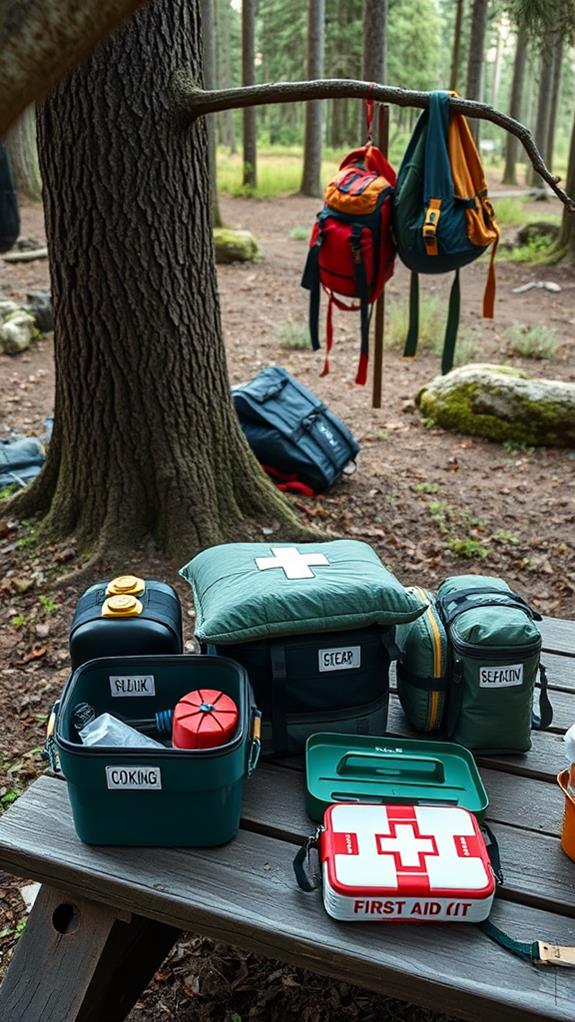
After organizing your camping checklist, the next step is to designate gear categories. By sorting your equipment into clear groups—like cooking supplies, sleeping gear, and safety items—you make packing and unpacking smoother.
This method not only streamlines your setup but also aids in regular gear maintenance. When you know where everything goes, it's easier to spot items needing repairs or replacements.
Additionally, consider seasonal storage; store items you won't use until later in clearly labeled bins. This approach keeps your gear organized year-round and guarantees you're always ready for your next adventure.
Ultimately, well-defined categories enhance efficiency and reduce stress, allowing you to focus on enjoying the great outdoors.
Implement Color Coding
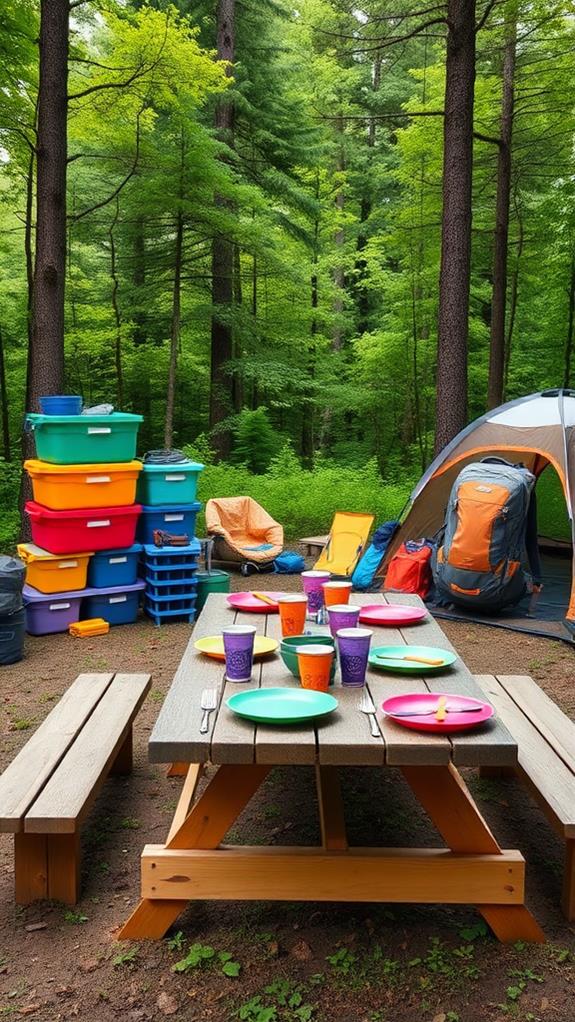
Color coding your camping gear can greatly enhance organization and efficiency. By applying color psychology, you can create a visual organization system that allows you to quickly identify your gear.
Assign specific colors to categories like cooking, sleeping, and first aid; this way, you'll immediately know where to look when you need something. For example, use green for cooking items, blue for sleeping gear, and red for emergency supplies.
This approach not only saves time but also reduces stress, ensuring you're well-prepared for your adventure. Plus, a visually appealing setup can boost your enthusiasm for outdoor activities.
Utilize Compression Bags
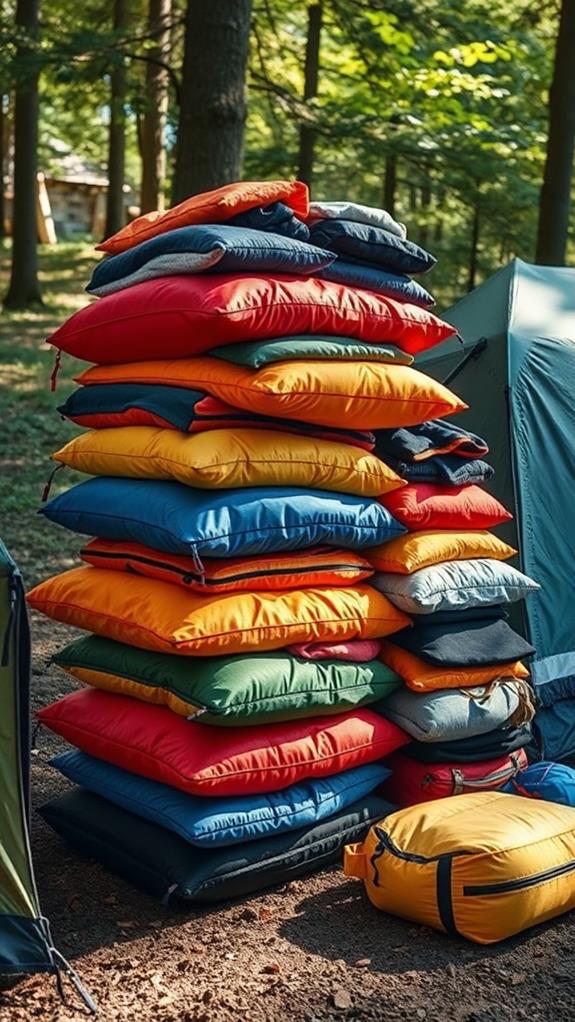
When packing for a camping trip, utilizing compression bags can transform your packing experience by maximizing space and keeping your gear organized.
These innovative travel space savers help you fit more into your backpack, ensuring you don't leave any essential camping gear behind. The compression bag benefits are clear: they not only reduce bulk but also protect your items from moisture and dirt.
By investing in efficient storage solutions, you can separate clothing, sleeping bags, and other gear easily, making it a breeze to access what you need. Plus, their lightweight design means you won't be adding unnecessary weight.
Create a Cooking Station
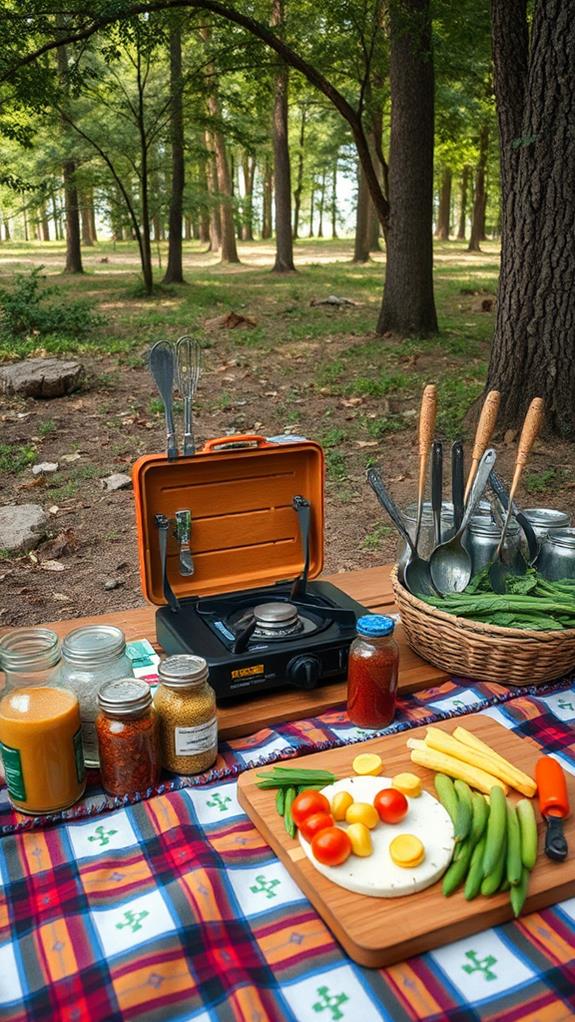
Having your gear organized with compression bags sets the stage for an efficient camping experience, especially when it comes to meal preparation.
To create a cooking station, choose a flat, stable surface, like a picnic table or portable camping table. Lay out your cooking tools—pots, pans, utensils, and a cutting board—within arm's reach. Use a compact, waterproof container for spices and seasonings to keep everything tidy.
Designate a spot for meal prep, ensuring it's away from your eating area to avoid contamination. Organizing your ingredients in small, labeled bags can streamline your cooking process.
Optimize Your Tent Space
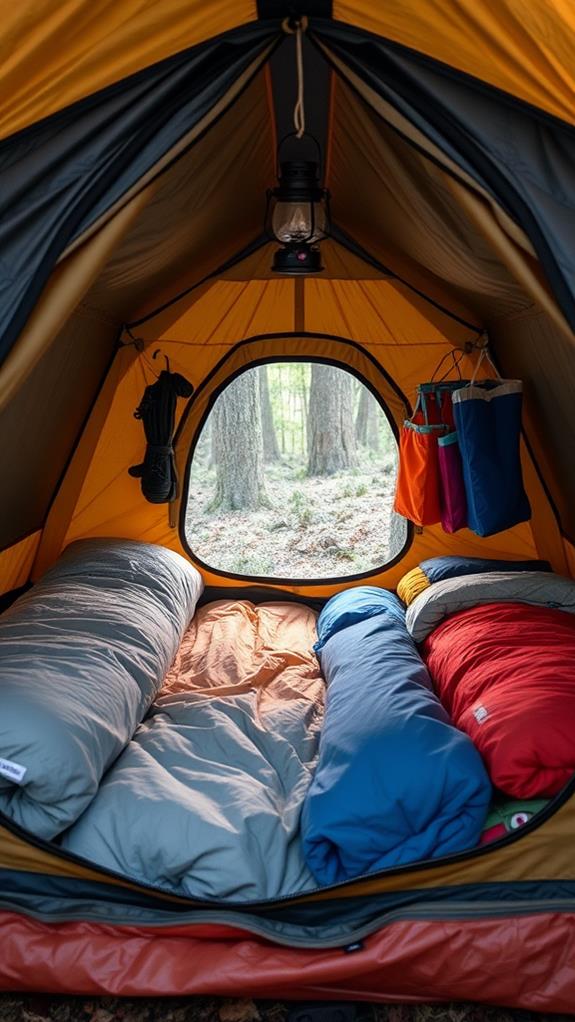
To make the most of your tent space, start by carefully planning the layout before you even unpack. Consider innovative tent layouts that maximize gear accessibility and comfort.
Use space-saving hacks like vertical storage to keep your belongings off the floor. Opt for multi-purpose furniture that can serve as seating and storage.
For privacy solutions, use portable dividers or curtains that also enhance your outdoor decor. Don't forget about camp lighting; string lights can create a cozy atmosphere while illuminating key areas.
Incorporate modular storage bins that can be easily rearranged to suit your needs. By focusing on tent organization, you'll create a functional, inviting space that makes your camping experience even more enjoyable.
Keep a First Aid Kit Handy
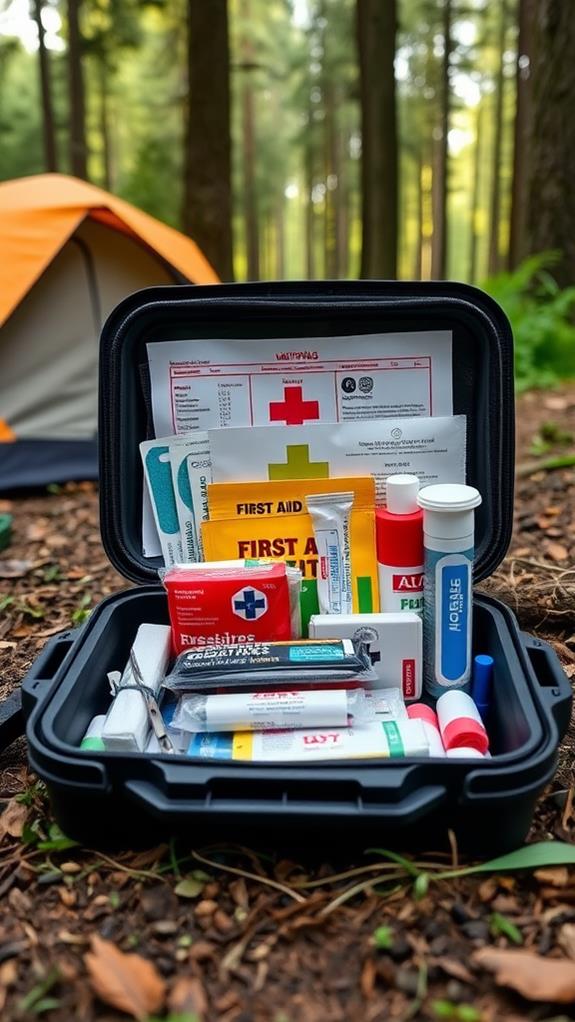
A well-stocked first aid kit is essential for any camping trip, ensuring you're prepared for minor injuries or emergencies.
Start by gathering first aid essentials like adhesive bandages, antiseptic wipes, gauze pads, and pain relievers. Don't forget to include a pair of scissors, tweezers, and any personal medications.
To enhance your emergency preparedness, consider adding items like a thermal blanket, emergency whistle, and a snake bite kit.
Organize your kit in a waterproof container to keep everything dry and easily accessible.
Regularly check your supplies to replace expired items and keep it stocked.
Store Food Safely
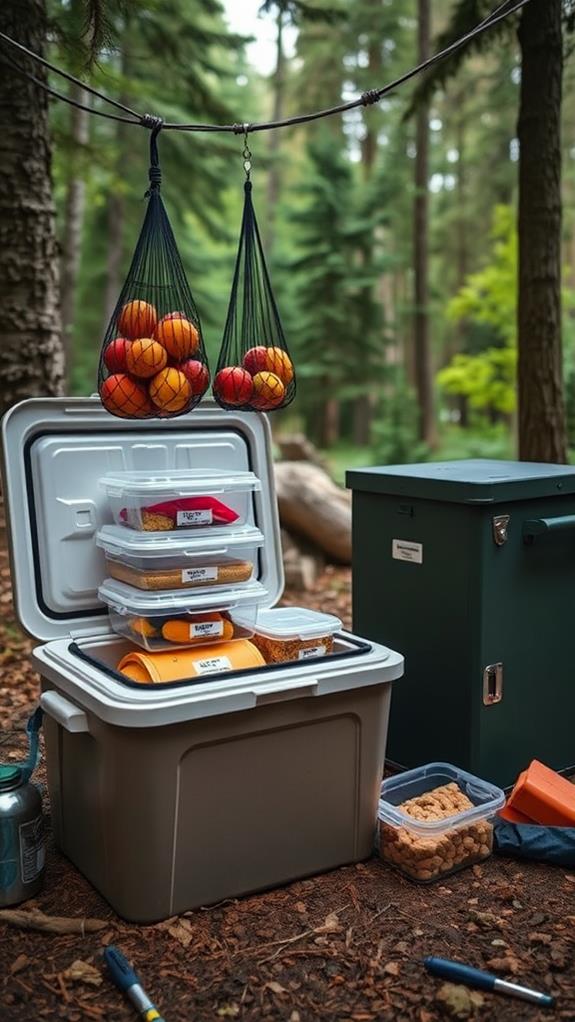
After ensuring your first aid kit is ready, it's time to think about how you'll store food safely during your camping trip.
Start with meal planning; know what you'll eat each day to streamline food rotation and minimize waste. Use effective packaging methods, like vacuum sealing or resealable bags, to maintain food preservation and control temperature.
Opt for storage solutions that prioritize pest prevention, like airtight containers. Don't forget your hydration strategies—pack plenty of water alongside snack options to keep energy levels up.
Consider cooking techniques that require minimal ingredients or leftovers for maximum efficiency. By combining these approaches, you'll enjoy a safe and delicious camping experience without the stress of food spoilage.
Use Waterproof Containers
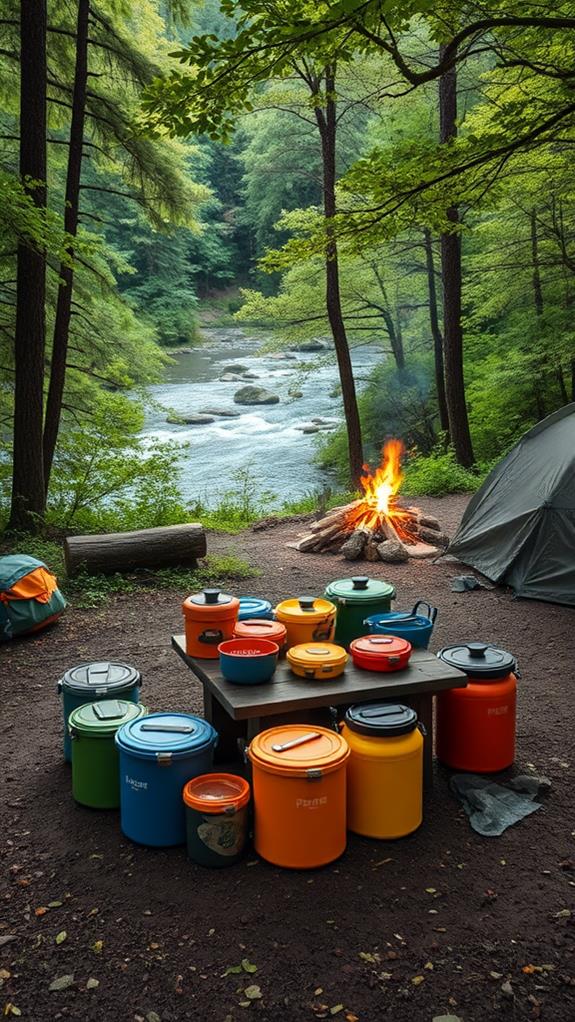
Using waterproof containers is essential for keeping your food and supplies safe from the elements during your camping adventure. The waterproof benefits are clear: they protect your gear from rain, moisture, and spills, ensuring everything remains dry and usable.
Consider various container types, like airtight bins for dry goods or collapsible containers for easy packing. Opt for durable materials like heavy-duty plastic or silicone, which resist wear and tear.
You could also invest in waterproof bags for clothing or electronics, adding another layer of protection. By incorporating these innovative storage solutions, you'll enhance your camping experience, reduce waste, and keep your items organized.
Get ready to enjoy the great outdoors without worrying about soggy snacks or ruined gear!
Plan for Clean-Up
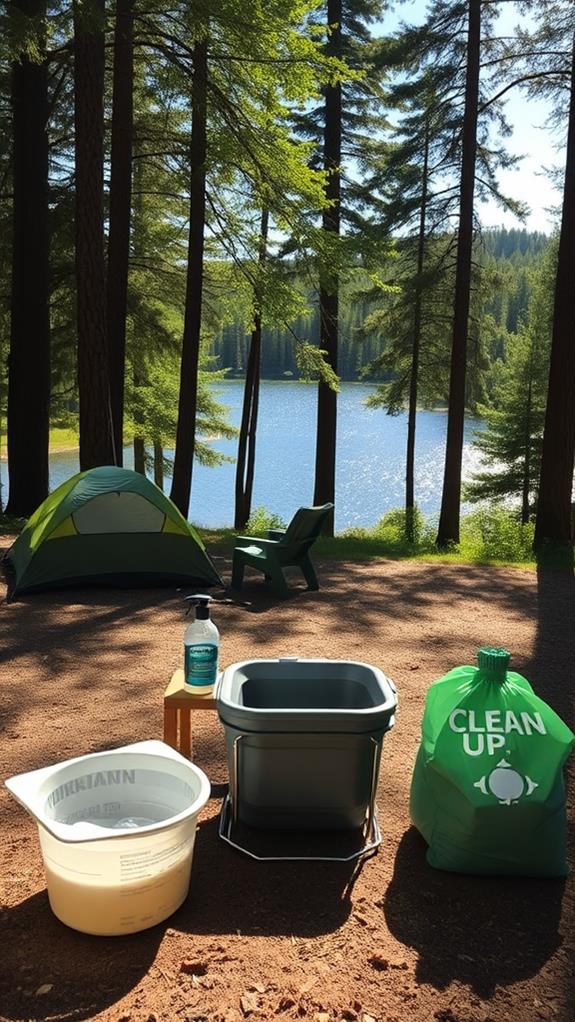
Keeping your camping gear organized doesn't just stop with storage; planning for clean-up is just as important. Before you head out, create effective clean-up strategies that'll make the process smooth and efficient.
Bring along a sturdy trash bag for easy trash disposal, and consider using reusable containers for food items to minimize waste. Designate a specific area for cleaning dishes and packing up leftovers, which helps keep your campsite tidy.
After meals, encourage everyone to pitch in for a quick tidy-up, making it a fun group activity. By planning ahead, you'll not only enjoy a clutter-free environment but also leave no trace behind, preserving the beauty of nature for others to enjoy.
Label Everything
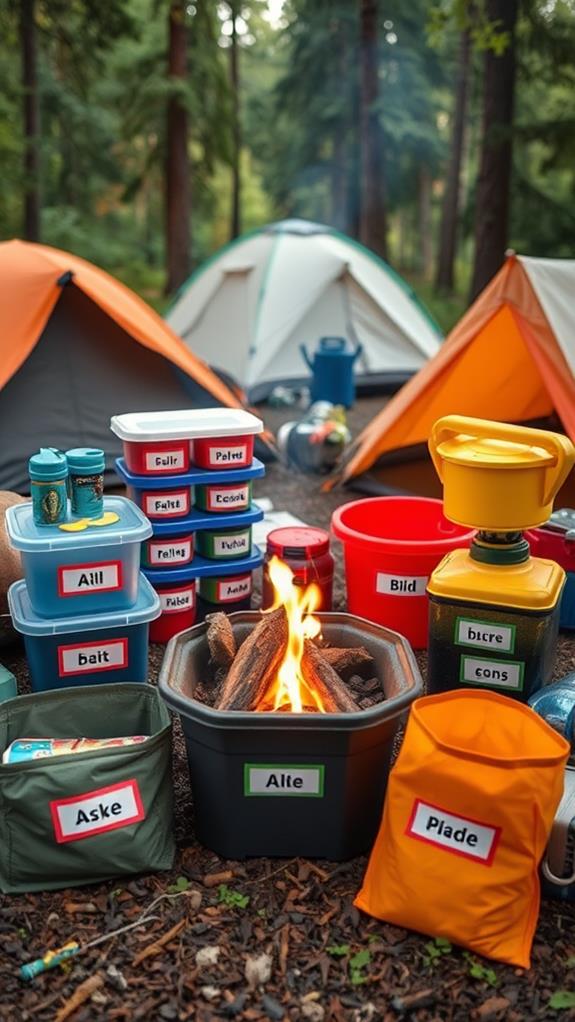
Labeling everything in your camping gear can transform your outdoor experience from chaotic to organized. Start by choosing different label types—like waterproof stickers or fabric tags—based on the conditions you'll face.
Consider label materials that withstand rugged use, ensuring they endure rain or wear. Using various label colors can help quickly identify gear categories, like cooking or sleeping supplies.
Think about label sizes too; larger labels are perfect for bins, while smaller ones suit individual items. Prioritize label locations for easy access—place them where they're visible.
Each label function should clarify contents, preventing confusion during setup. With a well-organized system, you'll enhance efficiency and enjoyment in nature, making every camping trip a breeze.
Arrange a Gear Drying Area
Once you've got your gear labeled and organized, it's time to think about how to keep it in top shape, especially after a wet adventure.
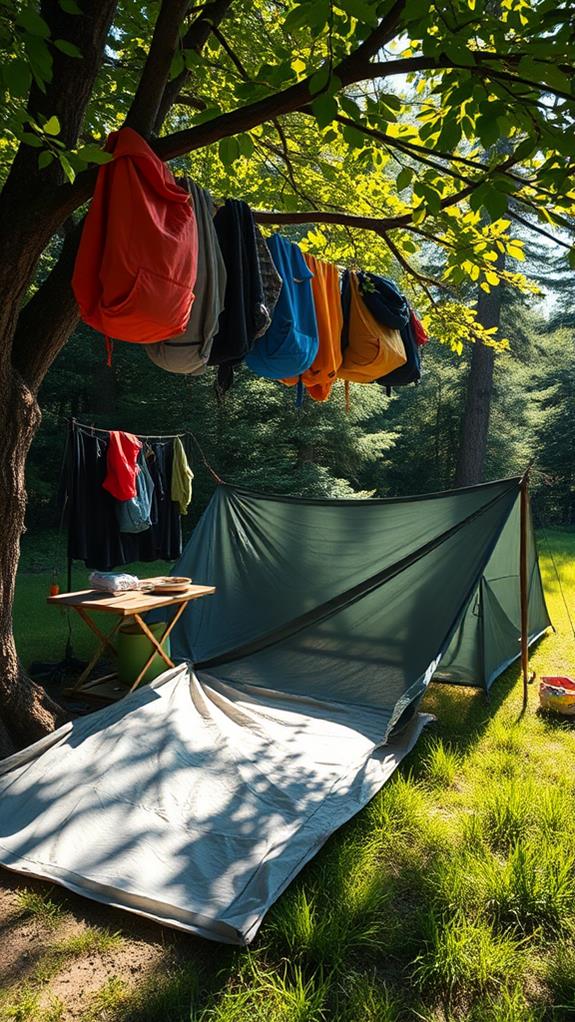
Setting up a dedicated gear drying area is essential for effective gear maintenance. Choose a well-ventilated spot, ideally with some sunlight exposure, to maximize drying efficiency.
Use hooks, lines, or racks to hang your wet gear, allowing air to circulate freely. Employ innovative drying techniques like portable fans or moisture-absorbing materials to expedite the process.
Remember to dry items thoroughly to prevent mildew and odors. By prioritizing this drying area, you'll extend the life of your equipment, ensuring you're always ready for your next outdoor escapade.
Prepare for Weather Changes
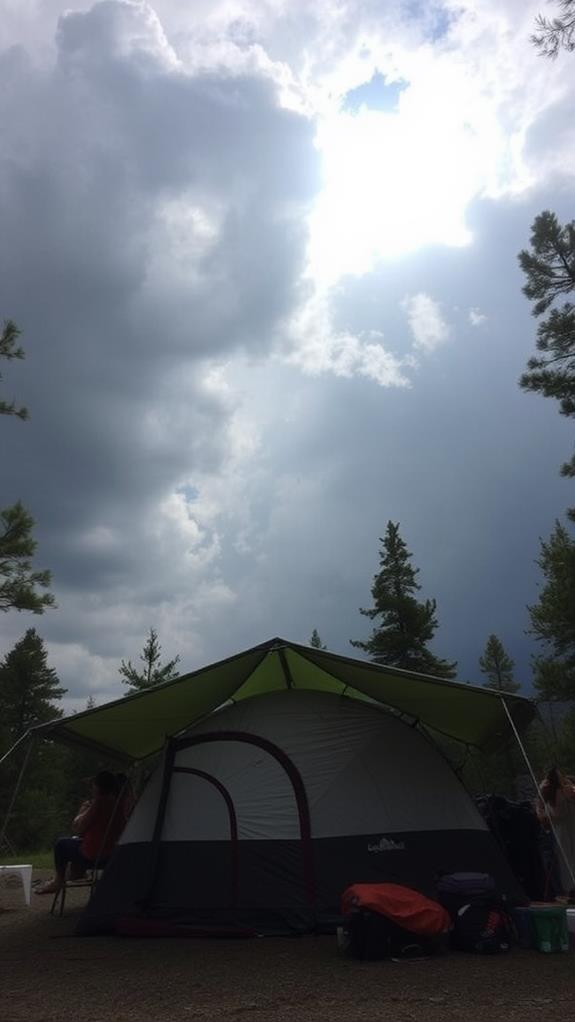
Weather can be unpredictable, especially when you're out in the wild, so being prepared for sudden changes is vital. Start by checking weather forecasts regularly to stay updated on potential storms or temperature extremes.
Pack emergency supplies, such as a first-aid kit and extra food, to guarantee you're covered in case of unexpected events. Use clothing layers to manage moisture and adapt to fluctuating temperatures; this way, you can add or remove layers as needed.
Consider adaptable equipment, like a versatile tent that can handle different conditions. Think about your shelter options too—having a backup plan for inclement weather is essential.
Review and Adjust Regularly
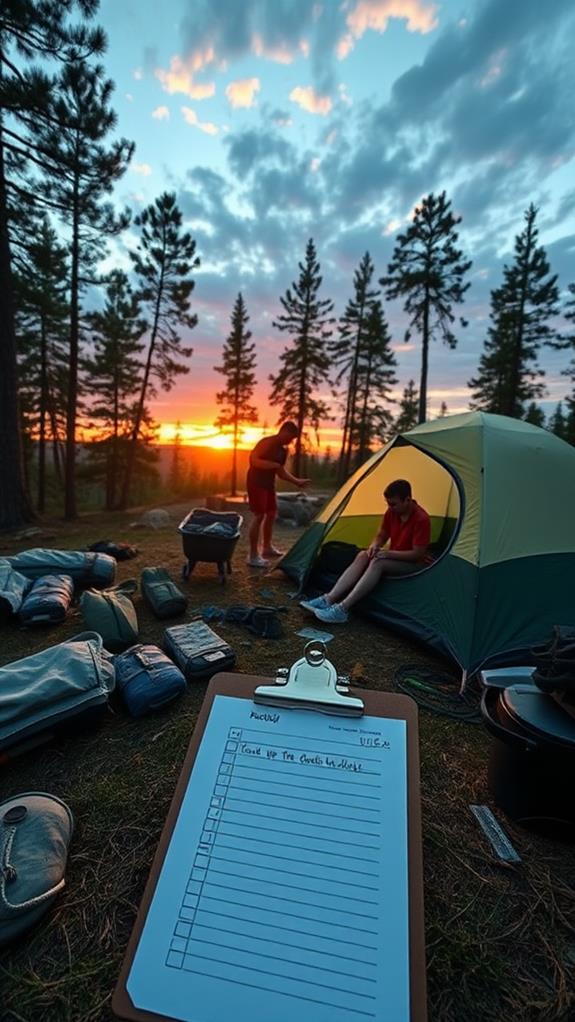
To keep your camping experience smooth and enjoyable, it's important to regularly review and adjust your plans as needed.
Start by evaluating your camping frequency—how often you venture out can impact your gear maintenance. If you're camping frequently, make sure that your equipment is in top shape; inspect tents, sleeping bags, and cooking gear for wear or damage.
Create a checklist to track gear condition and replace items as necessary. Additionally, consider your campsite preferences and any new locations you want to explore.
Regularly reassess your packing list to include innovative gadgets or tools that enhance your experience. By staying proactive, you'll enjoy a seamless camping adventure, making every trip memorable and stress-free!
FAQs
How Do I Determine the Best Camping Location for My Group?
To determine the best camping location for your group, start by evaluating your group size and preferences.
Research campgrounds that offer amenities like restrooms, showers, and picnic areas. Consider proximity to hiking trails or lakes for added fun.
Make sure the location can accommodate your group comfortably, ensuring everyone has enough space.
What Are the Most Common Mistakes to Avoid When Camping?
When you're camping, it's easy to make mistakes that can impact your experience.
First, don't forget to pack essentials like a first aid kit, proper clothing, and food. Skipping these can lead to discomfort.
Furthermore, plan your campsite setup carefully; avoid low areas where water might pool.
Also, failing to organize your gear can make it challenging to find what you need.
Stay mindful of these common pitfalls to enhance your adventure!
How Can I Entertain Kids While Camping?
To entertain kids while camping, you can try campfire games that spark their imagination and laughter. Gather around the fire for storytelling or charades, keeping everyone engaged.
Additionally, organize a nature scavenger hunt, where they search for unique leaves, rocks, or wildlife. This not only keeps them busy but also encourages exploration and appreciation of the outdoors.
With a bit of creativity, you'll create unforgettable memories and keep the fun alive!
What Safety Precautions Should I Take When Camping Alone?
When you're solo camping, balancing adventure with safety is essential.
Start by packing an emergency kit that includes a first aid kit, a whistle, and a flashlight. Always let someone know your plans and expected return time.
Stay aware of your surroundings and trust your instincts; if something feels off, it probably is.
Create a safe campsite away from hazards, and remember: being prepared means you can fully enjoy your outdoor experience.
How Do I Handle Wildlife Encounters While Camping?
When you encounter wildlife while camping, it's vital to stay calm and remember bear safety guidelines.
Observe wildlife behavior from a distance, and avoid any sudden movements. Make certain your food storage is secure to minimize attractants.
After meals, practice campsite cleanup to eliminate odors.
Always have encounter preparedness in mind, keeping bear spray accessible and knowing how to react.
These steps will help you enjoy a safe and peaceful camping experience.
Conclusion
By embracing these camping organization tips, you're not just packing gear; you're crafting a symphony of adventure. Each item in its rightful place transforms chaos into harmony, ensuring your outdoor experience is seamless. As you set forth into nature's embrace, remember to adapt and refine your approach. The great outdoors may be unpredictable, but with your organized toolkit, you'll navigate every twist and turn like a seasoned explorer, ready to seize the moment and create lasting memories.